Shoulder replacement
The modular Mirai system combines humeral and glenoid components in anatomical or reverse configurations.
Models and components


Mirai System
- Purpose
- A modular shoulder replacement system. The ball sits on the humeral side in the anatomical configuration and on the glenoid side in the reverse configuration.
- Product range
- Anatomical and Reverse configurations, with stemmed or stemless humeral fixation.
- Materials
- Ti6Al4V alloy, vitamin E-blended VITAL-E polyethylene and VITAL-B (TiNbN) coating.
Anatomical configuration
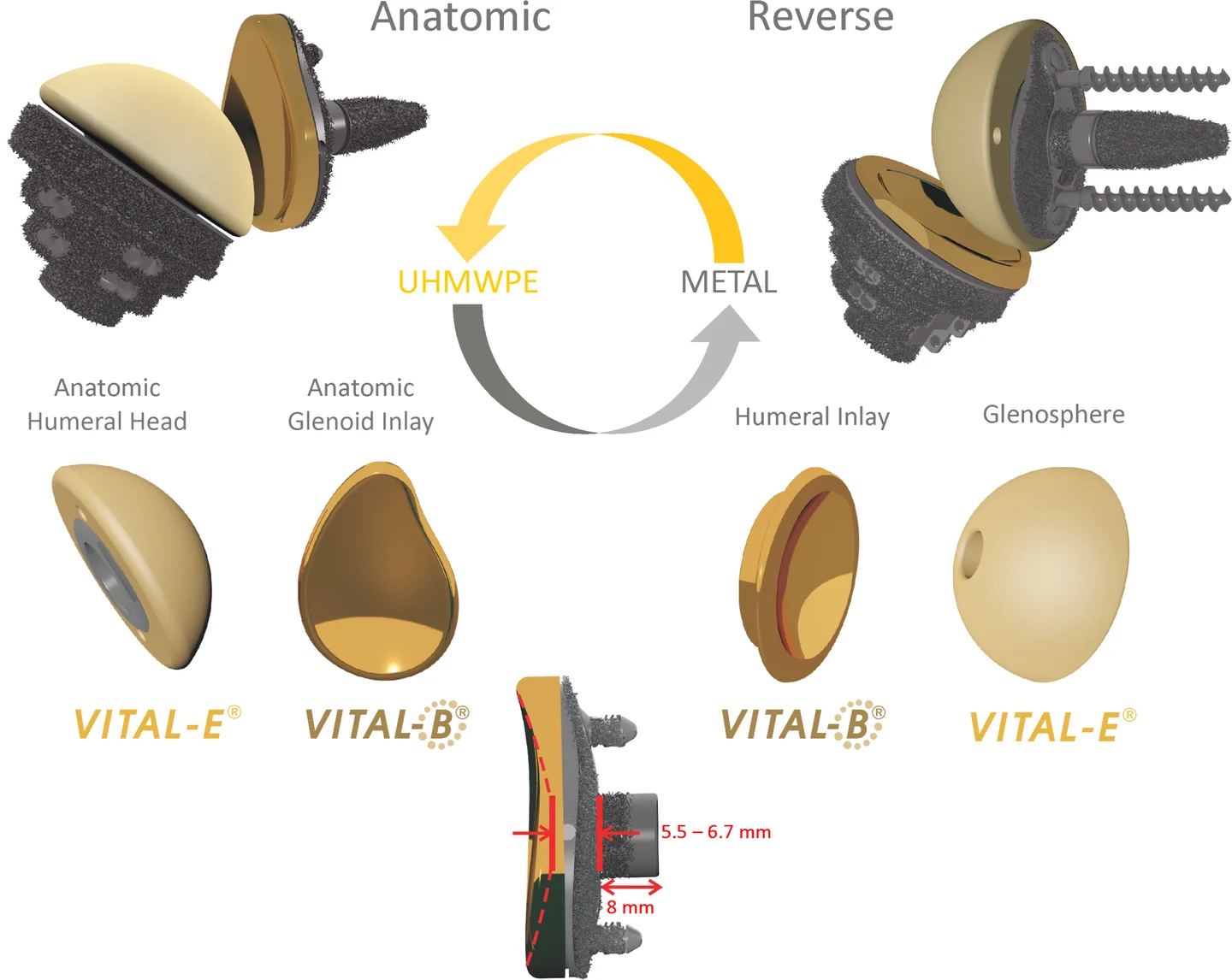
The humeral head articulates with the glenoid insert. Its elliptical shape reproduces the different curvatures of the natural head in two planes.
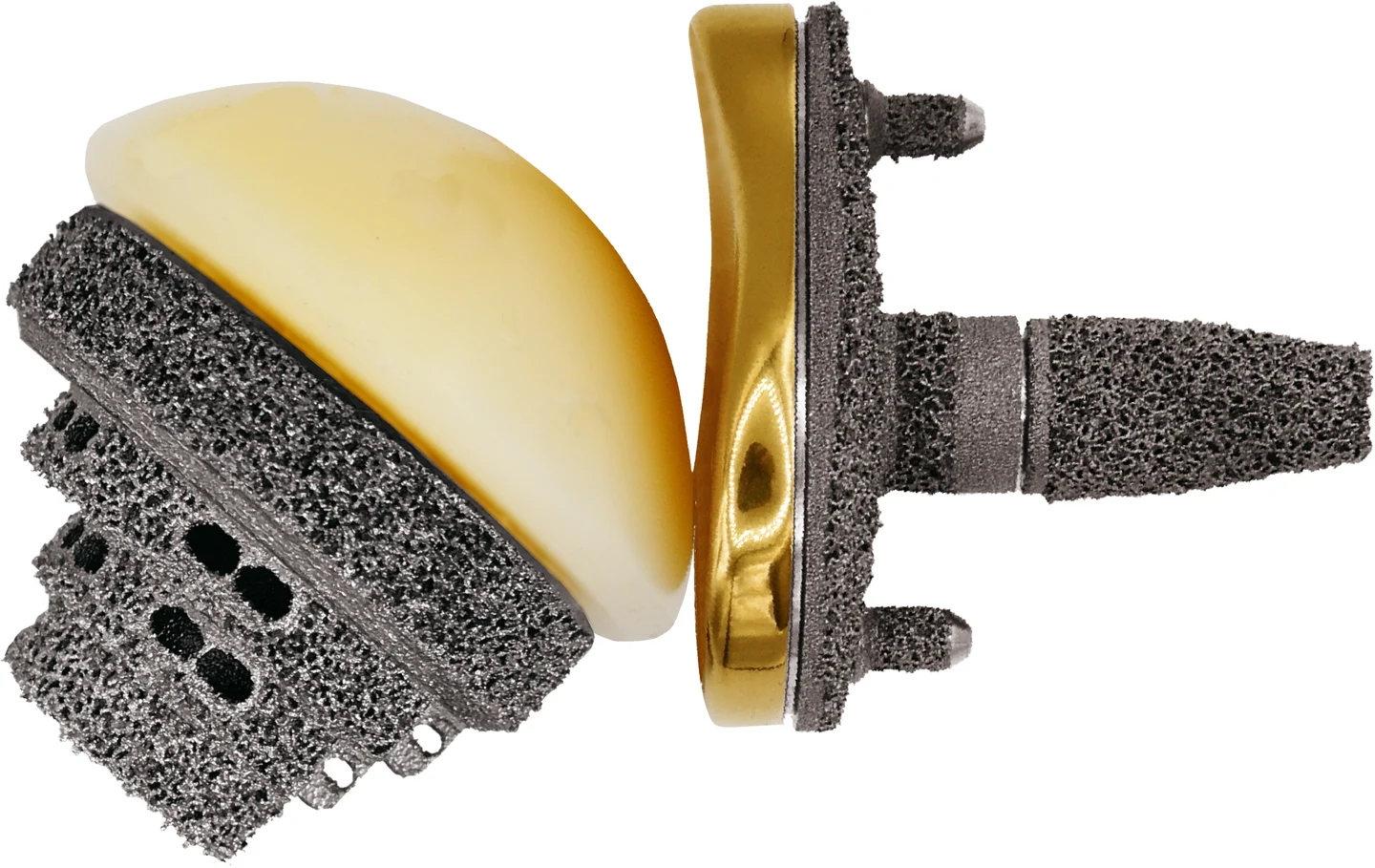
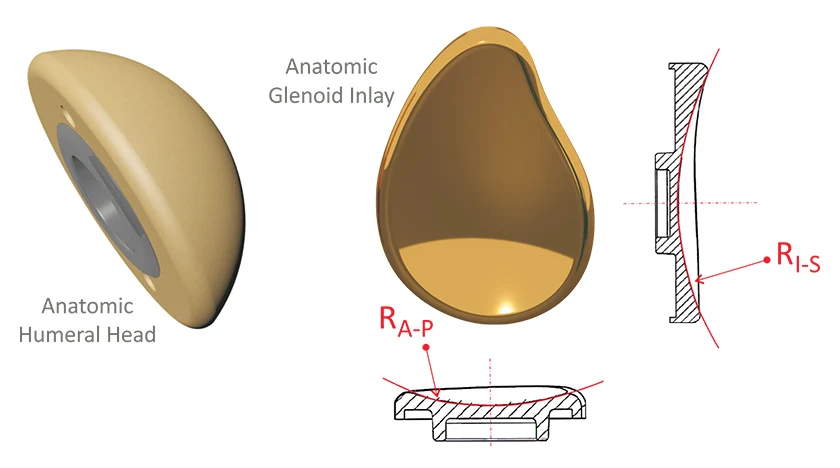
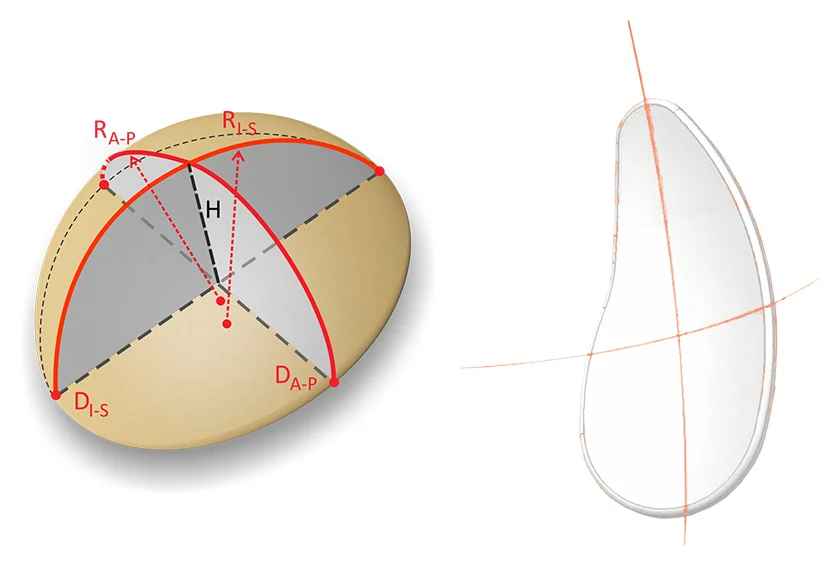
Reverse configuration and shared platform
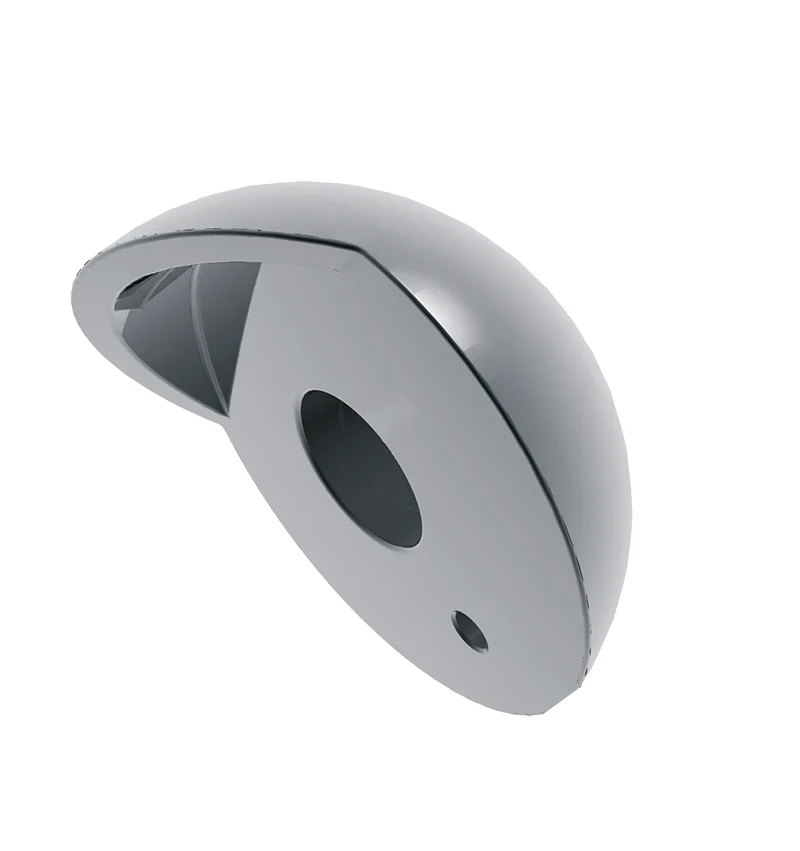
In the reverse assembly the glenosphere sits on the scapular side and the concave insert on the humeral side. The diagrams show both configurations of the shared platform.
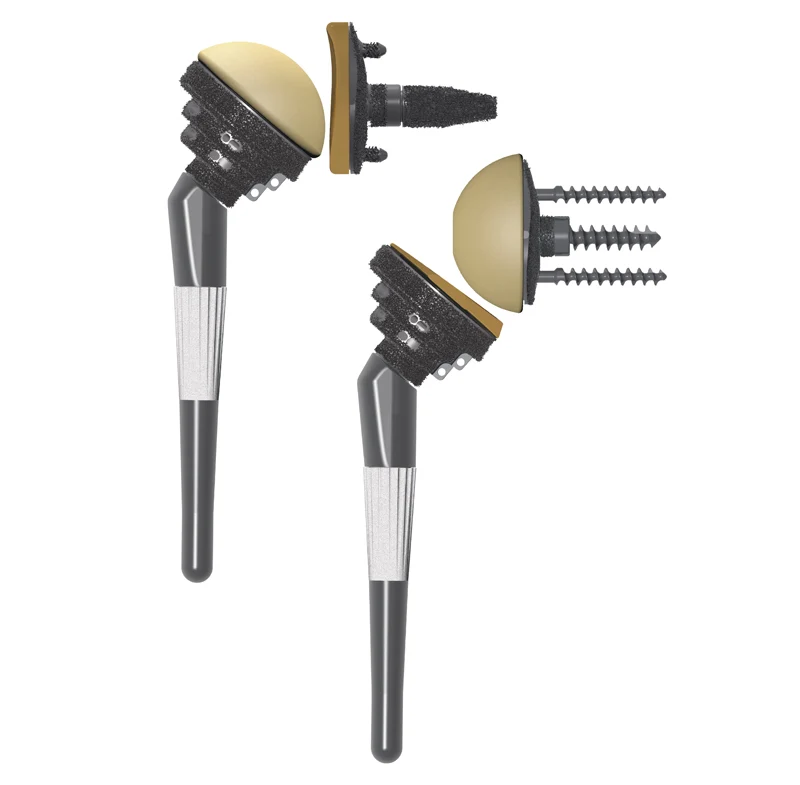
Bearing materials
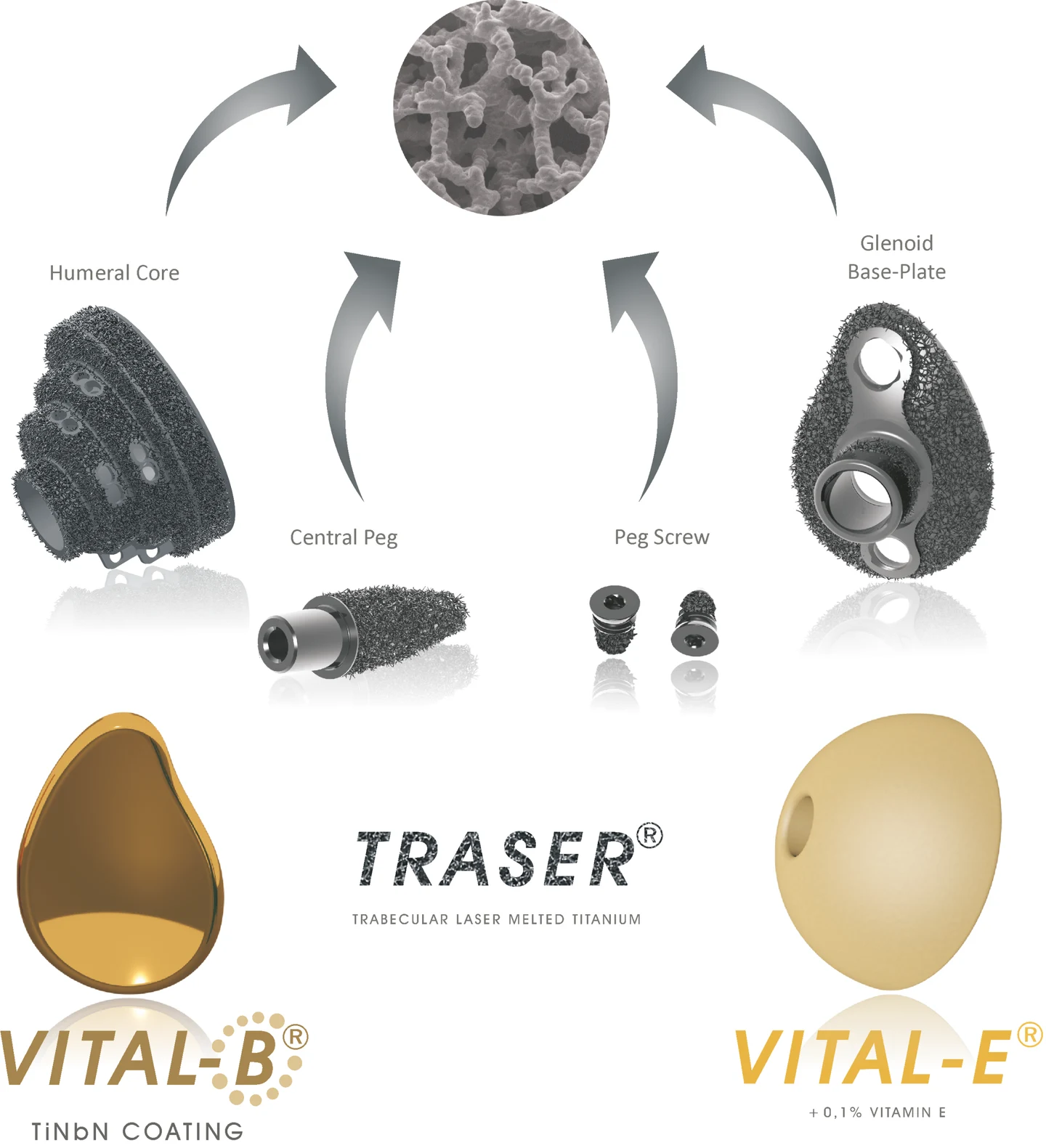
The anatomical head and reverse glenosphere are VITAL-E polyethylene. Their mating inserts are Ti6Al4V with a VITAL-B coating.
Humeral modularity
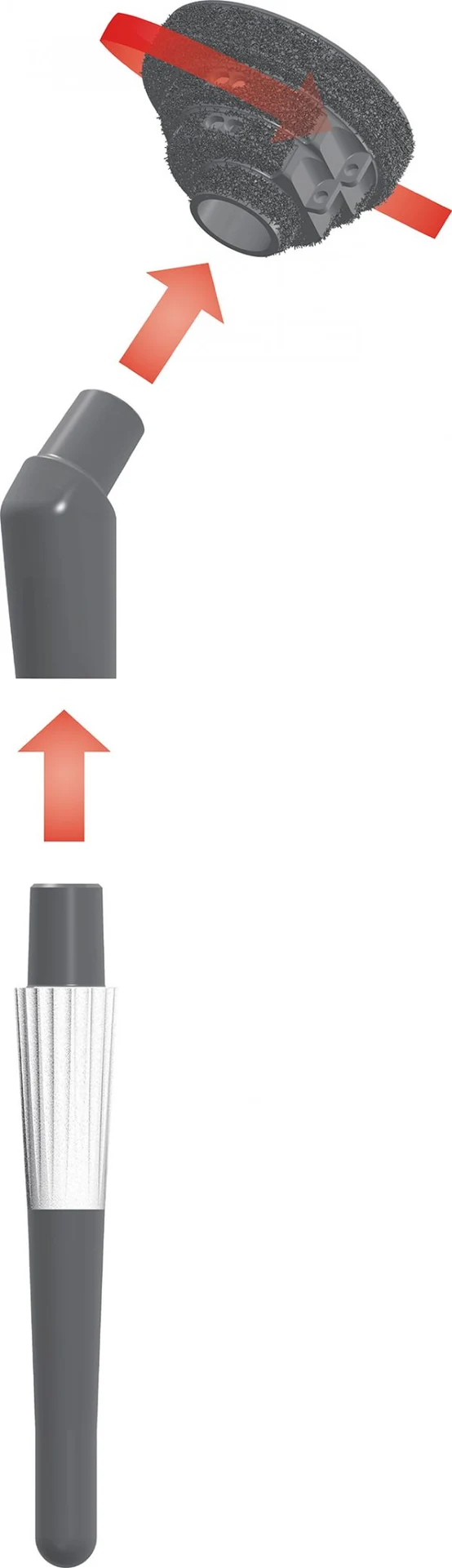
The system allows conversion to reverse configuration while retaining a stable, integrated core. The metaphyseal component offers several angles and offsets.
| CCD angle | Offset, mm |
|---|---|
| 130° | 0 / 3.5 / 5 |
| 140° | 0 / 3.5 |
| 150° | 0 / 2 |
Revision components
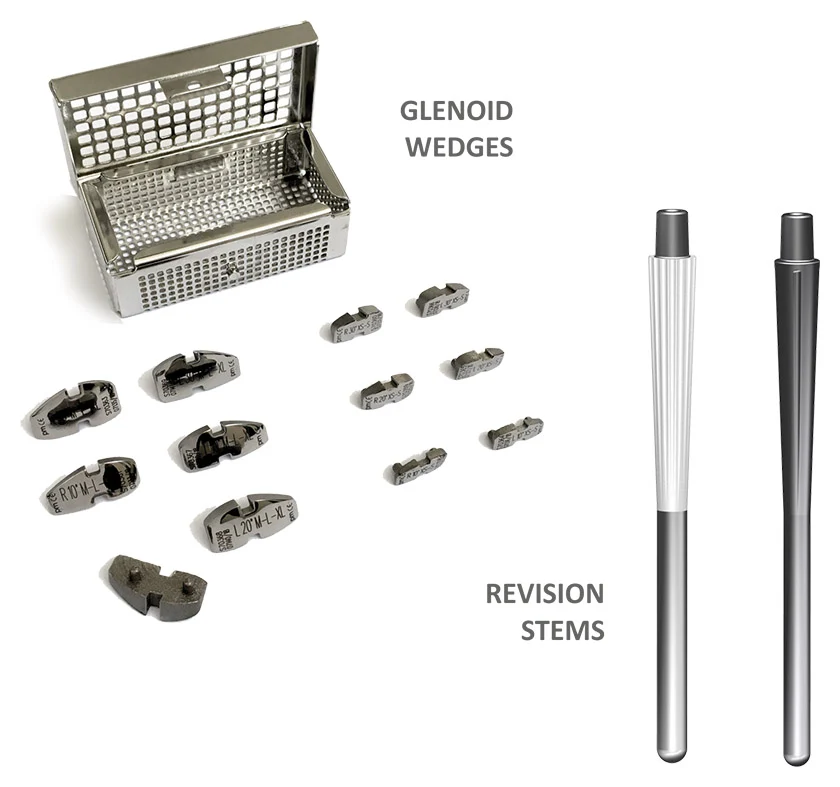
The portfolio includes glenoid wedges for version correction and long humeral stems.
Trauma Core and CTA head
Trauma Core supports reconstruction of the proximal humerus. The anatomical range also includes a CTA head for severe rotator cuff damage.


Mirai R Glenoid Baseplate
- Purpose
- A baseplate anchors the glenosphere to the scapula in reverse shoulder replacement.
- Product range
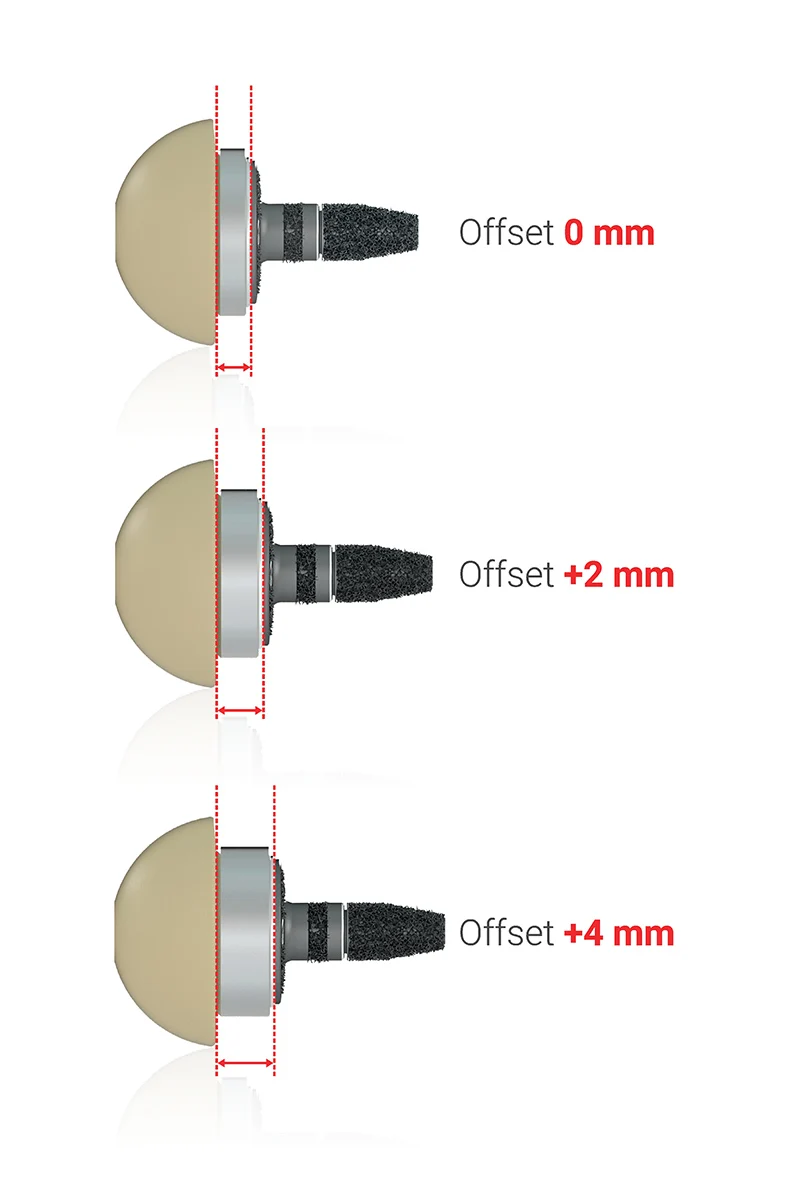
- Ø 25 and 27 mm. Inclinations of 0° or 10°, with 20° available to order. Offset options of 0, +2 or +4 mm.
- Materials
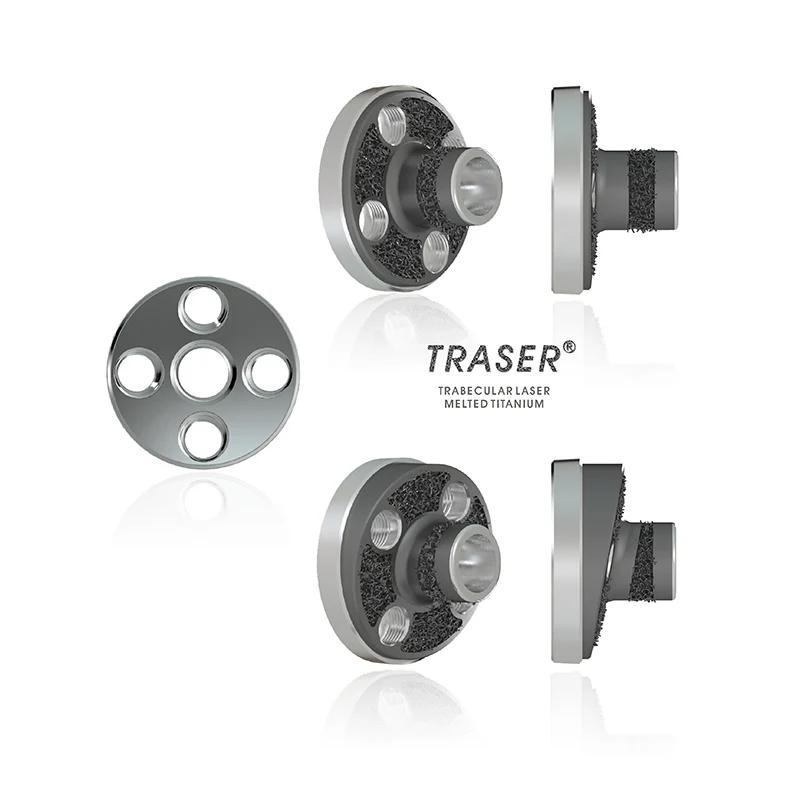
- A central peg with a porous titanium TRASER structure is available.
Baseplate design
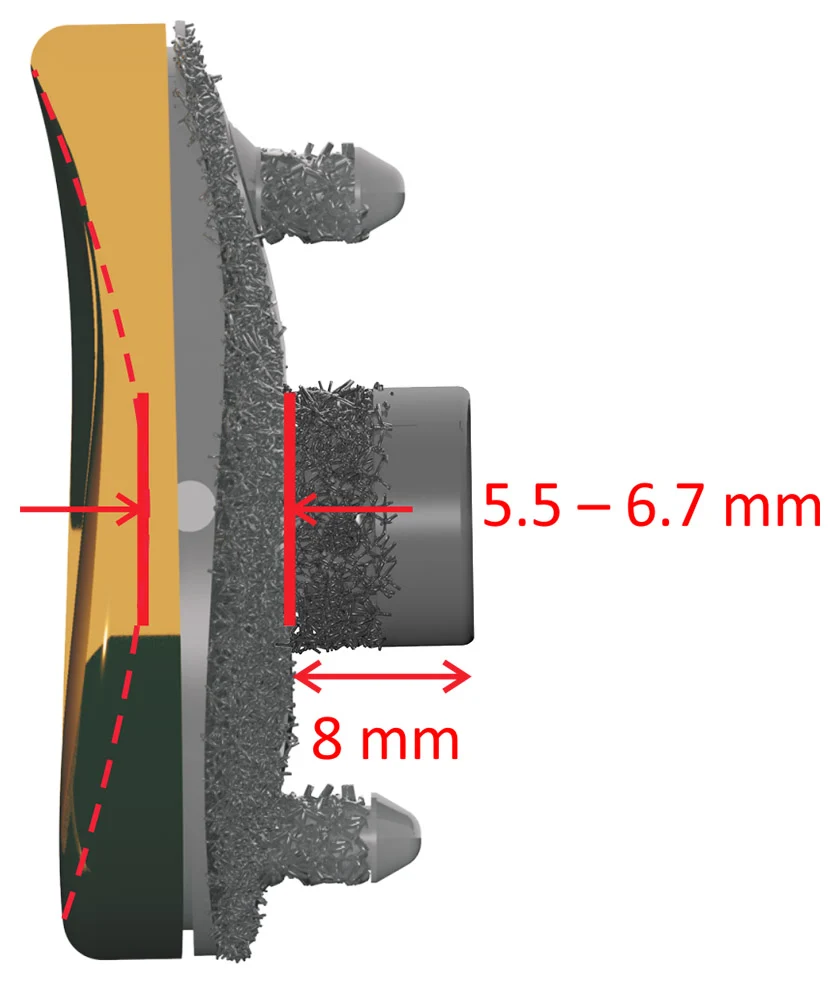
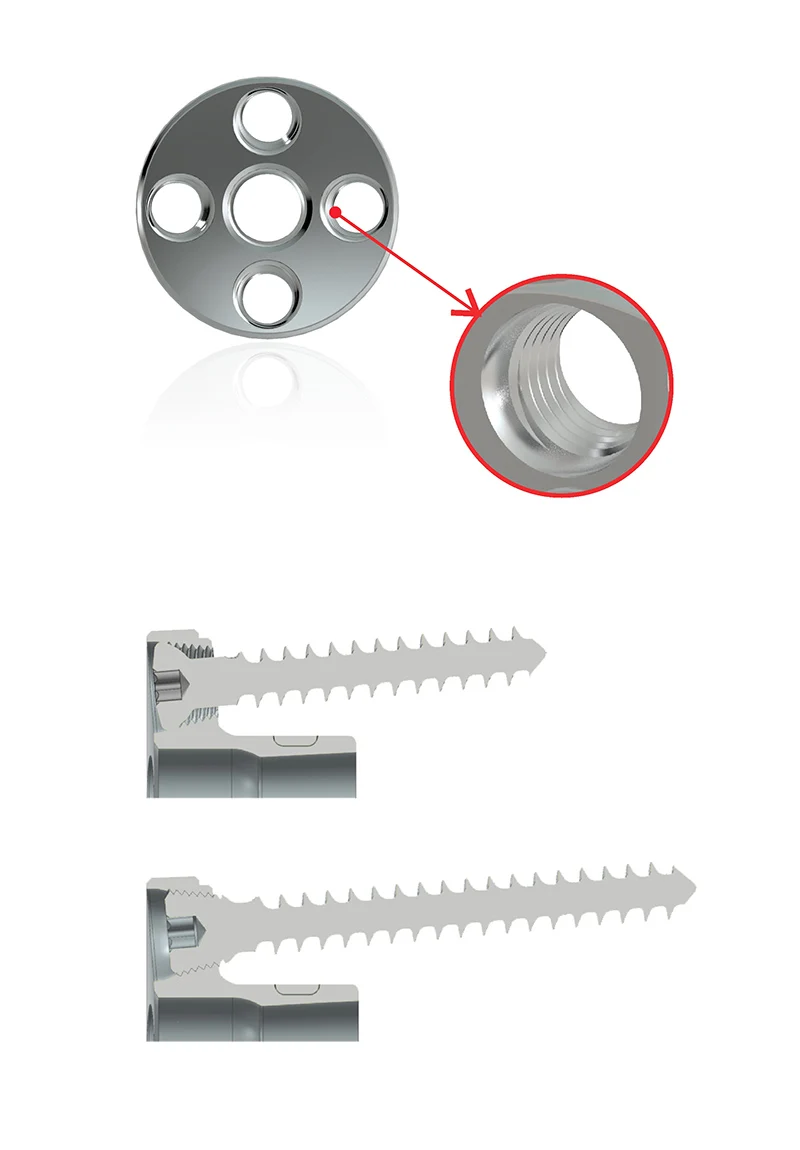
The circular plate has one central and four peripheral holes and comes in 25 and 27 mm diameters.
Offset options
Adapters provide offsets of 0, +2 or +4 mm.
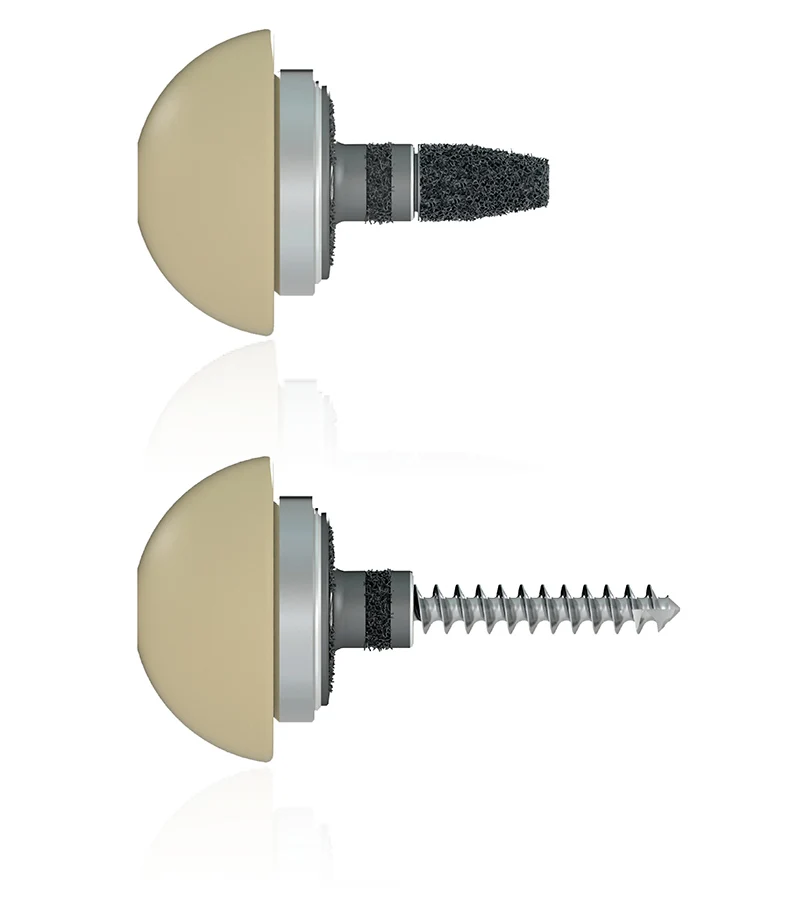
Central and peripheral fixation
Central fixation uses a porous TRASER peg or a compression screw. Peripheral holes accept standard or locking screws.


Conical Humeral Core
- Purpose
- A conical core anchors the humeral side of Mirai in the proximal humerus.
- Product range
- XS, S, M and L with a 140° angle. Compatible with anatomical and reverse configurations.
- Materials
- Porous TRASER titanium structure.
Mirai humeral core
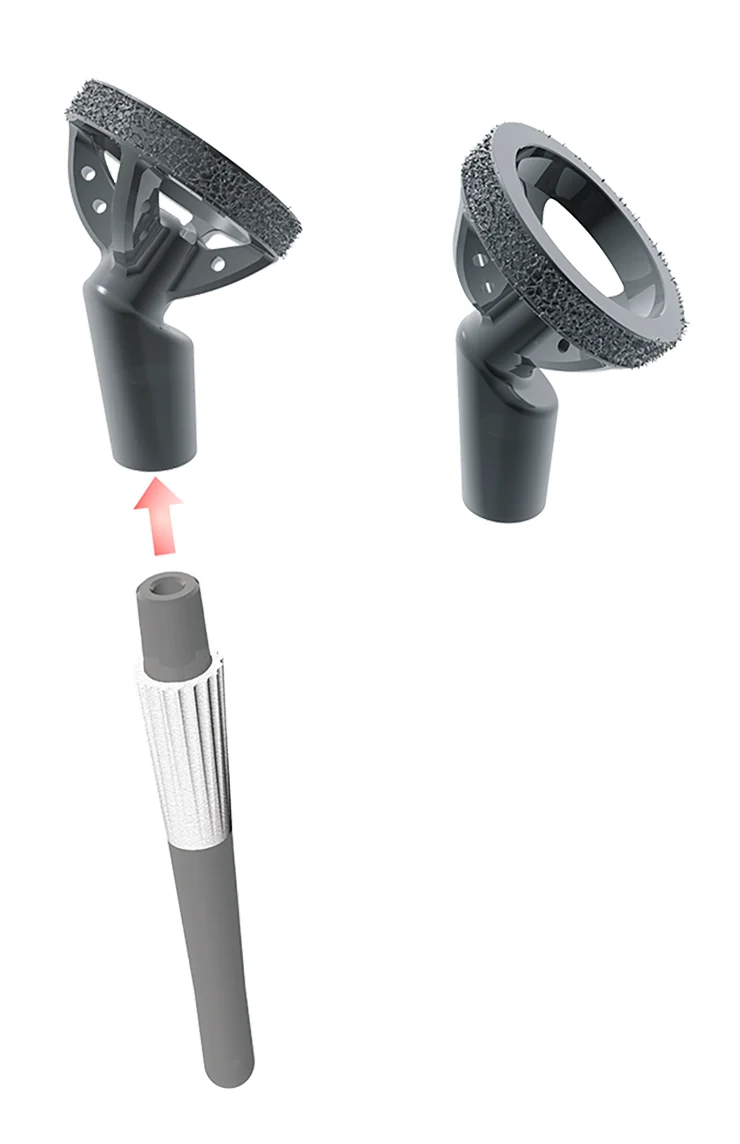
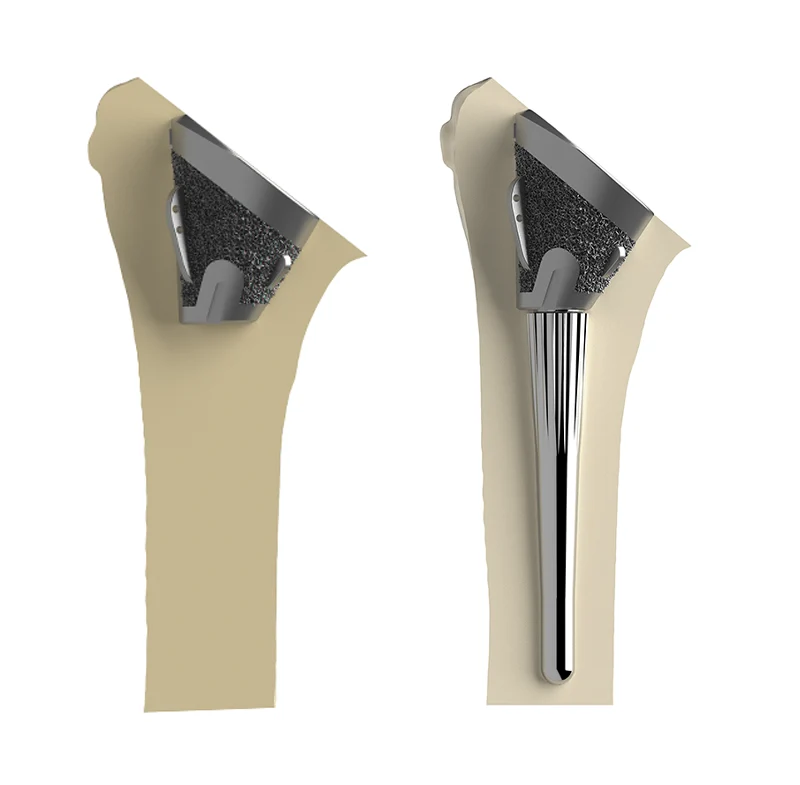
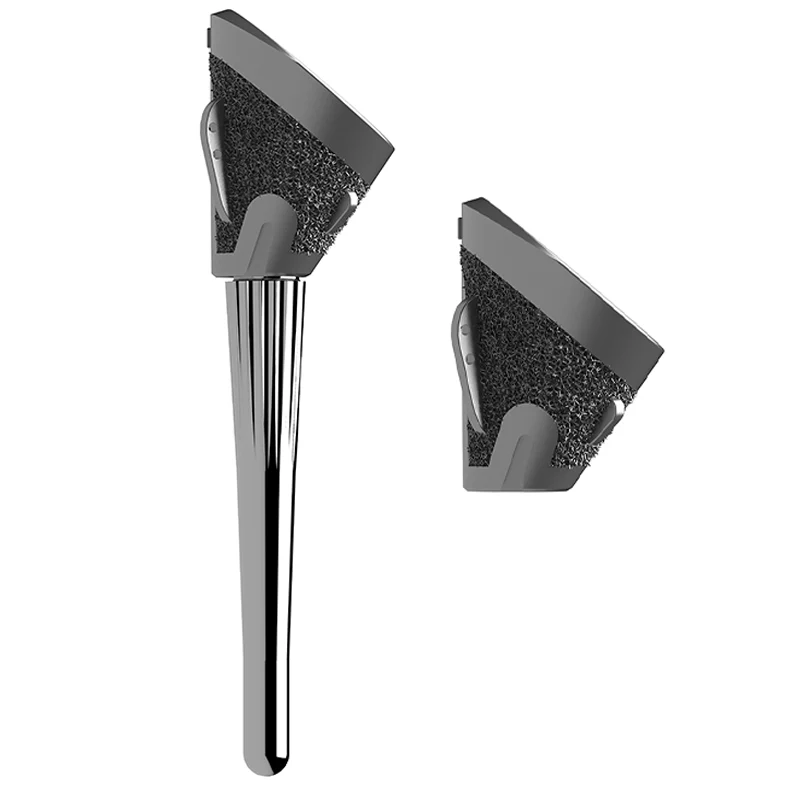
The conical core fits both anatomical and reverse configurations. Lateral fins provide rotational stability.
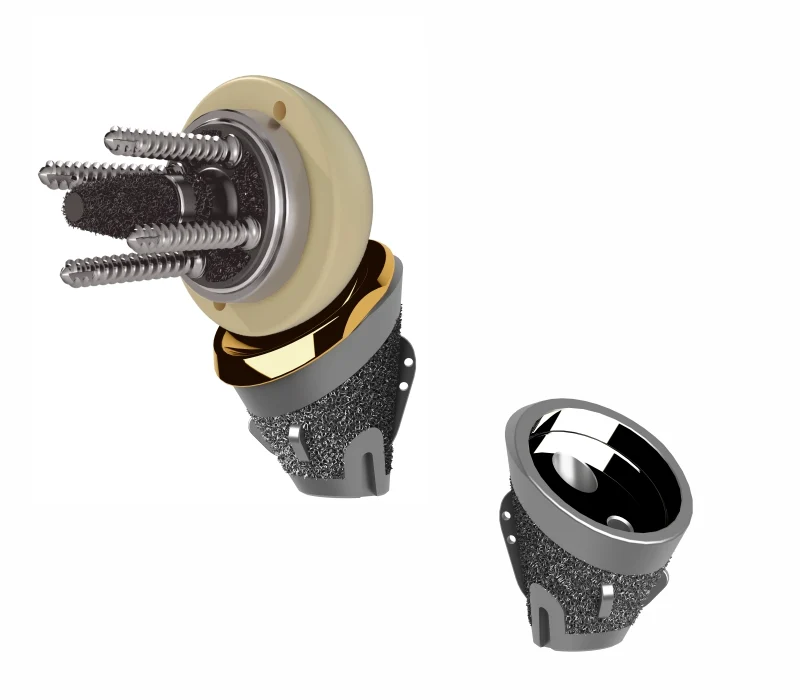
Stemless and stemmed configurations
The core can be used alone in the proximal humerus or connected to a diaphyseal stem for additional distal fixation.


Technologies
3DMirai Planning & PSI uses CT data for three-dimensional preoperative planning and the preparation of patient-specific surgical guides.